Are you struggling to get more diners through your doors? Ever wonder why some restaurants pop up first on Google while others remain invisible, even with the same menu and great food? The difference usually comes down to targeting the right keywords, the exact phrases potential customers type when searching for a meal. In this guide, you’ll learn how to find high-converting keywords for restaurants in any U.S. city, so your business gets seen, booked and buzzing with hungry customers.
Why Keywords Are the Secret Sauce for Restaurant SEO
Think of keywords as the bridge between your restaurant and your next customer. The right keywords don’t just bring traffic, they attract people who are ready to book a table, order takeout or attend an event.
Here’s what smart keyword targeting can do:
- Drive more reservations and online orders
- Boost your Google Maps and local search rankings
- Increase engagement with your website and social media
- Generate real revenue, not just clicks
In local search, phrases like “best burger near me” or “family-friendly Mexican restaurant in Dallas” are gold. These are high-intent searches, customers are actively looking to eat, not just browse.
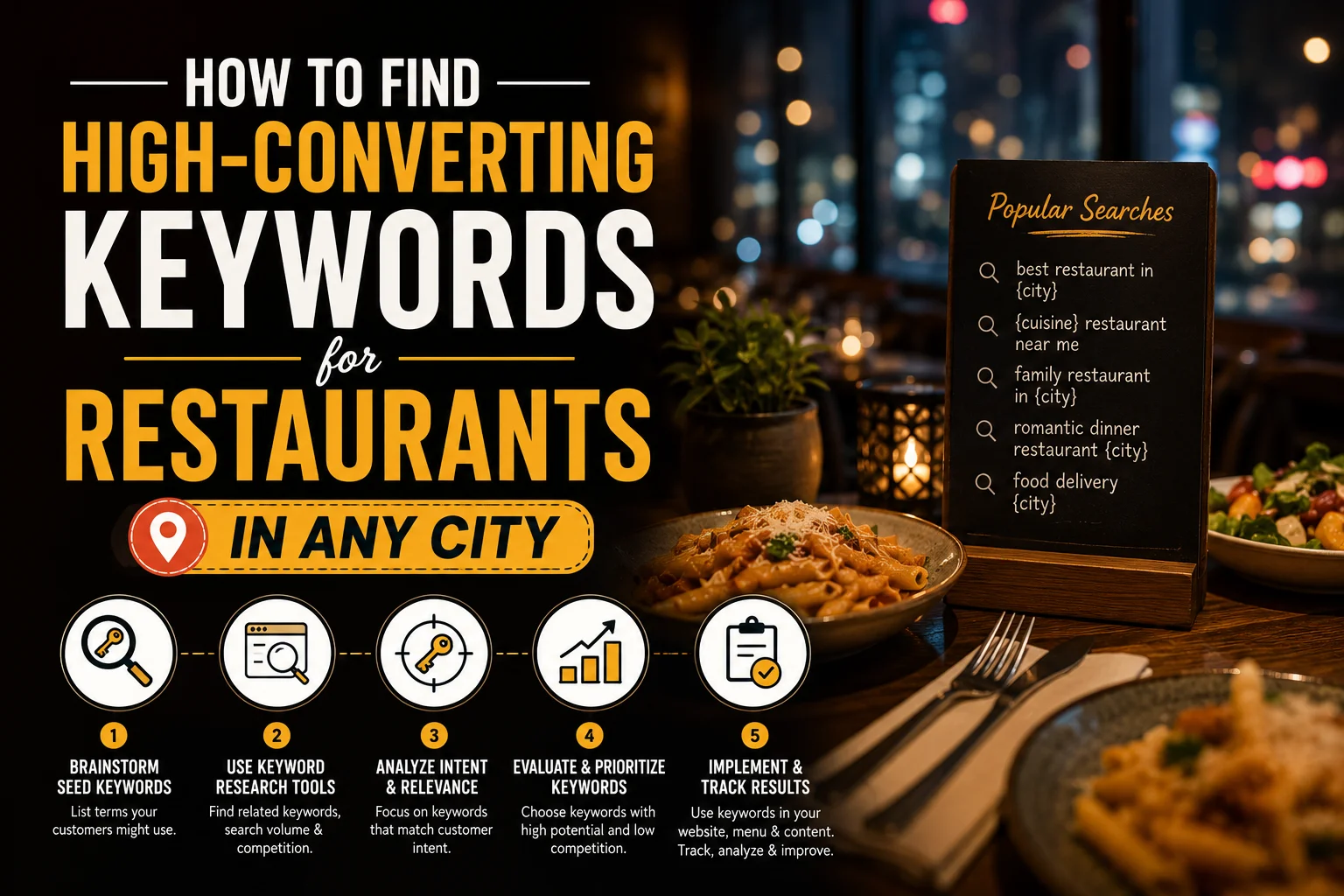
Step 1: Understand Your Audience
Start by putting yourself in your customers’ shoes. Ask:
- What type of food are they craving?
- Which neighborhood or city are they searching in?
- Are they looking for dine-in, takeout or delivery?
Creating a customer persona helps you uncover their intent. For instance, someone searching “romantic Italian dinner in Chicago” is more likely to make a reservation than someone typing “Italian pasta recipes.” Knowing this ensures you target terms that convert.
Step 2: Use Powerful Keyword Research Tools
Keyword research is where strategy meets data. Focus on tools that give:
- Search volume – how often a term is typed
- Competition – how difficult it is to rank
- Local relevance – phrases including cities, neighborhoods, or landmarks
Top tools for restaurant SEO include:
- Google Keyword Planner – Free and reliable for local searches
- Ahrefs – Excellent for competitor insights and keyword gaps
- SEMrush – Great for discovering niche keywords and content opportunities
Pro tip: Prioritize long-tail keywords like “vegan brunch in downtown Denver”. They’re less competitive and attract customers ready to take action.
Step 3: Spy on Your Competitors
Your competitors can teach you a lot. Check out restaurants ranking above you and note:
- Which keywords they use in titles, meta descriptions, and headings
- Their Google Business Profile setup and optimization
- The content driving traffic to their website
This competitive insight helps you spot untapped keyword opportunities and refine your strategy.
Step 4: Prioritize Local and Intent-Driven Keywords
For restaurants, local SEO is everything. Combine cuisine, service type and location in your keywords. Examples:
- “best sushi near Times Square”
- “family-friendly Mexican restaurant in Austin”
- “late-night burger delivery in Brooklyn”
Add action-oriented words like “reserve,” “book,” or “order” to capture users who are ready to convert. These high-intent keywords turn searches into diners.
Step 5: Organize and Prioritize Keywords
Once you have a list, categorize your keywords:
- Primary keywords – Core searches with high volume, e.g., “Italian restaurant in Miami”
- Secondary keywords – Long-tail, niche terms, e.g., “gluten-free Italian pizza in Miami”
- Supporting keywords – Related searches to sprinkle naturally in content, e.g., “authentic pasta recipes”
Focus on intent-driven, location-specific keywords first, these bring the highest return.
Step 6: Strategically Place Keywords for Maximum Impact
High-converting keywords need placement where search engines and customers notice:
- Page titles and meta descriptions
- Google Business Profile listings
- Headings (H1, H2) and subheadings
- Menu pages and blog content
- Blog posts answering local customer questions
Remember: Keep it natural. Google rewards helpful, readable content over keyword stuffing.
Conclusion
Finding high-converting keywords for restaurants is more than just traffic, it’s about connecting with diners who are ready to act. By understanding your audience, analyzing competitors, targeting local, high-intent keywords, and placing them strategically, your restaurant can dominate local search results and fill tables consistently.
Start your research today and watch your online visibility and your bookings, skyrocket. For expert guidance and proven results, visit Local SEO For Restaurants.
FAQs
1. What are high-converting keywords for restaurants?
Keywords that attract local diners ready to make a reservation or place an order.
2. Should I target broad keywords like “pizza”?
No, focus on long-tail, location-specific keywords with clear intent.
3. How many keywords should I target initially?
Start with 10–30 high-intent keywords and expand gradually.
4. Can I track keyword performance?
Yes, tools like Google Analytics, Ahrefs or SEMrush monitor rankings, traffic and conversions.
5. Do keywords help delivery or takeout restaurants?
Absolutely. Use action-driven terms like “order” or “delivery near me” with your location
Call to Action
Ready to fill more tables and increase online orders? Contact Local SEO For Restaurants for tailored strategies that work.